Stainless steel cookware sits in nearly every serious kitchen for good reason, genuinely durable, safe at high heat, and free of any coating to worry about degrading over time. Finding the best stainless steel cookware set for your own kitchen comes down to understanding a few construction details most shoppers never think to check.
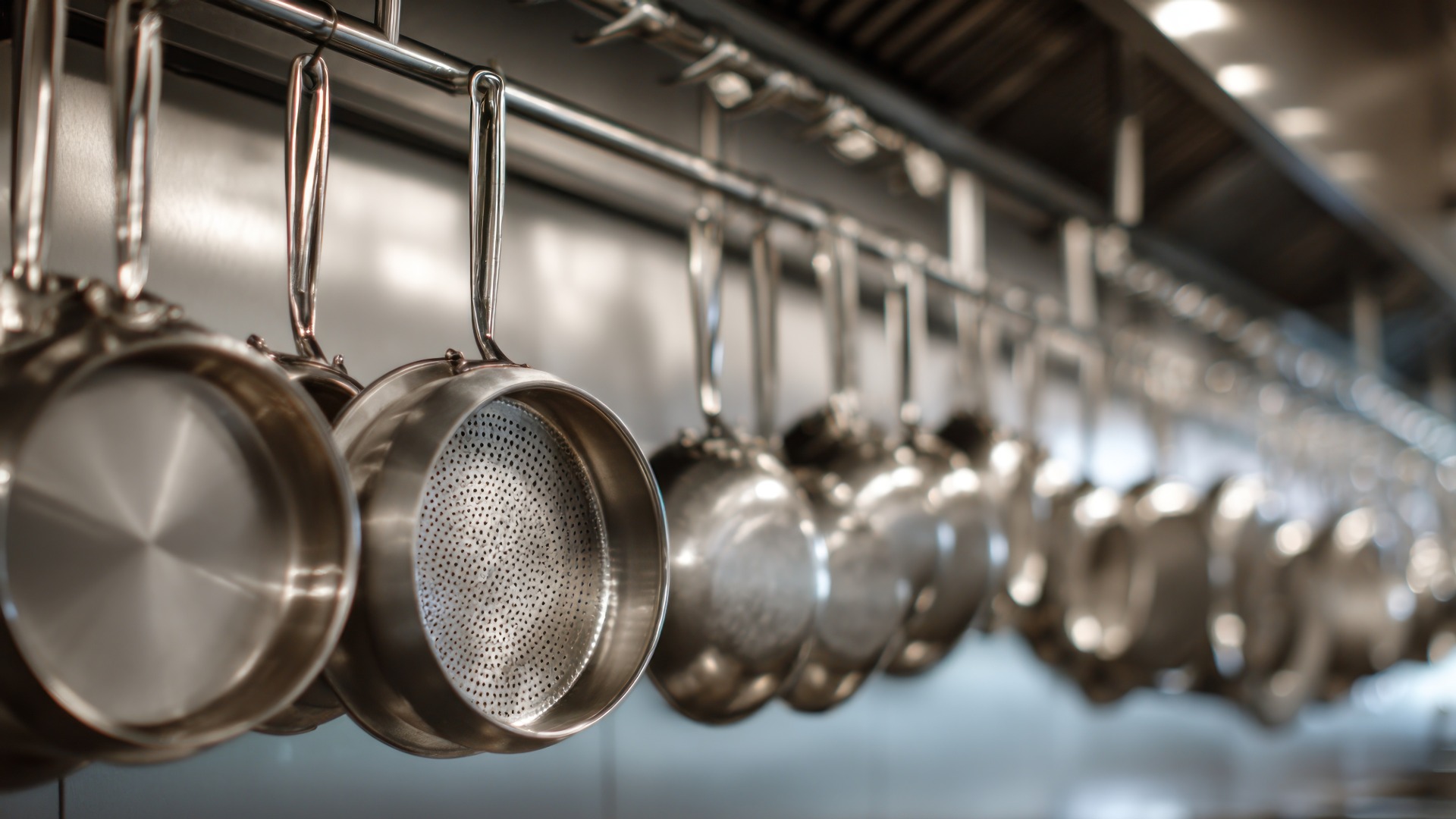
The single biggest factor separating a genuinely good stainless pan from a mediocre one is the base construction, specifically whether it uses a fully clad, multi-layer design (often called tri-ply or five-ply) versus a cheaper disk-bottom construction where a layer of conductive metal is bonded only to the base rather than running through the entire pan wall. Fully clad construction heats far more evenly across the whole pan, sides included, while disk-bottom pans develop hot spots at the edges since only the center benefits from the conductive layer underneath.
Best Stainless Steel Cookware Set: Why Layers Matter
Stainless steel alone is actually a relatively poor heat conductor, which is why quality stainless cookware sandwiches a core layer of aluminum or copper, both excellent conductors, between layers of stainless steel. This combination captures stainless steel's durability and non-reactivity on the cooking surface while borrowing aluminum or copper's superior, even heat distribution for the actual cooking performance.
Best Stainless Steel Cookware Set: What Piece Count Tells You
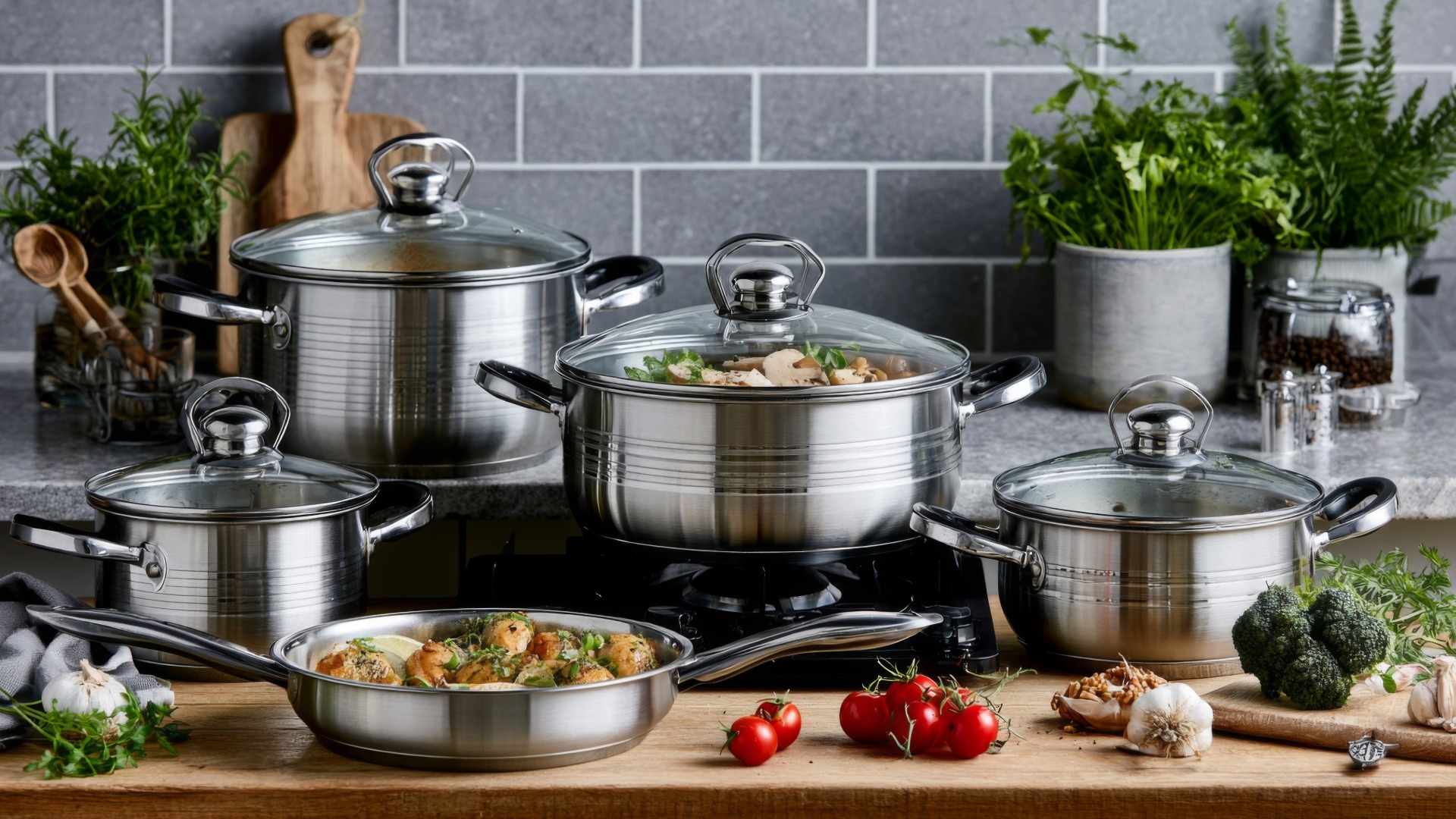
A large set with a high piece count is not automatically a better value than a smaller, more thoughtfully chosen set, since many bulk sets pad their count with lids, small prep bowls, or duplicate sizes rarely used in practice. Evaluating a set by which specific pan sizes it includes, a versatile 10 or 12-inch skillet, a couple of useful saucepan sizes, a stockpot, matters far more than the total number printed on the box.
Handle Design and Real-World Comfort
Handles that stay cool on the stovetop, riveted securely rather than welded with cheaper adhesive methods, and shaped comfortably for extended use matter enormously for everyday cooking, especially for heavier pieces like a full stockpot. Testing handle comfort in person, or reading detailed reviews that specifically address handle heat and grip, is worth doing before committing to a set based on appearance alone.
Compatibility With Your Actual Stovetop
Not every stainless pan works on every stovetop; induction cooktops specifically require a magnetic stainless layer in the base, which not all stainless cookware includes, so confirming induction compatibility explicitly before buying, if that is your stovetop type, prevents an expensive mismatch. The same attention to fit-for-purpose applies to knives too, and the santoku knife vs chef knife decision deserves the same deliberate consideration as cookware compatibility, since the wrong knife for your typical prep style creates the same kind of daily friction as cookware that doesn't match your stovetop.
Maintenance That Keeps Stainless Performing Well
Stainless steel can develop discoloration or a slightly cloudy appearance over time from mineral deposits or overheating, though this is cosmetic rather than a performance issue, and a dedicated stainless steel cleaner or a simple vinegar rinse restores the shine easily. Understanding proper knife maintenance follows a similar logic; knife skills improve dramatically once a cook understands that a well-maintained tool, whether a knife or a stainless pan, performs better and lasts longer than a neglected one regardless of original quality.
Getting the Most Out of a New Set
Once a quality set is in the kitchen, efficient use matters as much as the purchase itself; the kind of fast, well-organized cooking behind 10 minute high protein lunches for work genuinely depends on cookware that heats predictably and cleans up easily, exactly what a properly constructed stainless set delivers on a busy weekday.
The best stainless steel cookware set comes down to fully clad, multi-layer construction, a thoughtfully chosen range of pan sizes rather than sheer piece count, and comfortable, secure handles, not simply the most recognizable brand name on the box. Prioritizing these fundamentals produces a set that performs well and lasts for decades rather than a few disappointing years.

Katie Drsoptig is Sugar Press’s Culinary Technique and Food Science Editor. She explains the mechanics behind cooking methods across every cuisine, why braising tenderizes, why brining works, why blanching sets color, breaking each technique down into steps any home cook can repeat with confidence.