Grabbing whichever carton happens to be in the pantry, stock or broth, rarely ruins a dish, but stock vs broth is not actually the same thing wearing two different labels. The distinction comes down to what goes into the pot and how long it simmers, and knowing the difference genuinely changes which one belongs in which recipe.
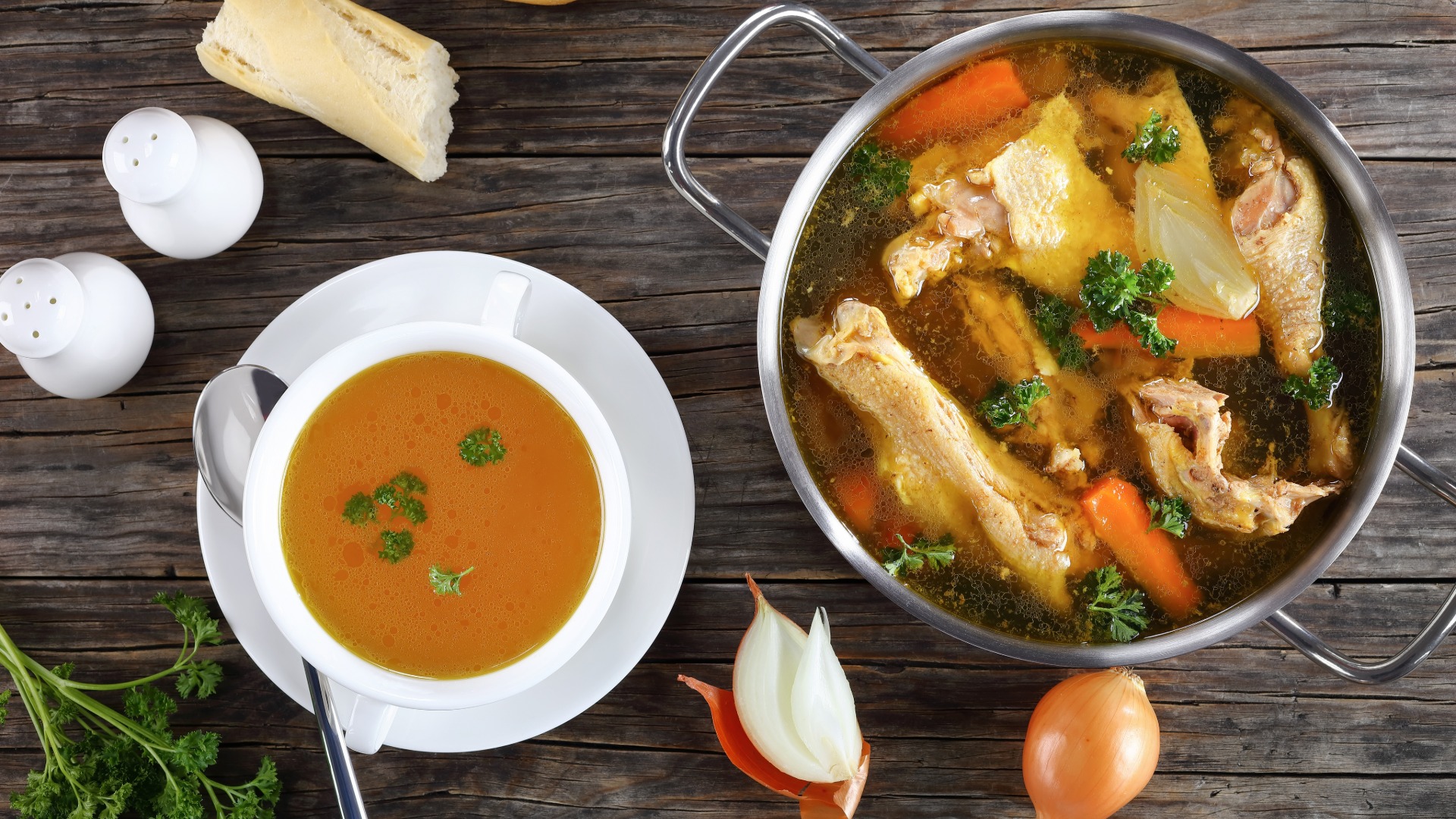
Stock is built from bones, chicken, beef, or fish, simmered for an extended period, often several hours, to extract collagen and minerals, which is exactly why a properly made stock turns gelatinous once chilled. Broth is built primarily from meat, simmered for a comparatively shorter time, generally under an hour, since meat toughens if cooked much longer than needed to fully cook through. Bone broth muddies this distinction slightly, since it uses bones like a stock but simmers even longer than either, occupying its own category despite the name.
Stock vs Broth: The Seasoning Difference
Stock is traditionally left unseasoned, since it is meant to serve as a flexible base you season later, once it becomes part of a specific dish. Broth is traditionally seasoned and built to be sipped or served largely as-is, which is exactly why store-bought broth carries meaningfully more sodium than an equivalent carton of stock. This distinction matters practically: substituting broth for stock in a recipe without adjusting added salt elsewhere is one of the most common reasons a homemade soup or sauce ends up oversalted.
Stock vs Broth: Texture and Body
A well-made stock has real body and viscosity from dissolved collagen, thick enough to coat a spoon and often gelling when chilled. Broth stays thinner throughout, closer to a light, flavorful water than a rich, clingy liquid. This textural difference is why stock's concentrated body suits dishes wanting more structure, chowders, bisques, gumbo, while broth's lighter consistency suits clear soups and dishes where a heavier liquid would feel out of place.
When to Reach for Stock
Anywhere a dish needs body and a neutral, seasonable base, braises, risottos, pan sauces, and heartier stews, stock is the better structural choice, since its collagen content adds richness a thinner broth cannot replicate. A rich stock base pairs especially well with a hearty side too; tossing a batch of steak fries alongside a stock-based braise rounds out a meal that leans into exactly the same deep, savory direction.
When to Reach for Broth
Clear soups, consommés, and dishes where the liquid itself is a prominent, sippable component benefit from broth's lighter, already-seasoned character. Broth also works well as a quick cooking liquid for grains and vegetables where you want built-in flavor without adding significant extra viscosity to the finished dish.
Substituting One for the Other
In most everyday recipes, stock and broth can substitute for each other reasonably well, provided you account for the seasoning gap, adding less additional salt if using broth, and accept a slightly thinner final texture if substituting broth for stock in a dish built to rely on stock's body. The swap works far better in a soup or braise than in a dish specifically built around a reduced, concentrated stock base, where the missing collagen becomes noticeably more obvious.
Making Your Own vs Buying
Homemade stock, simmered patiently from saved bones and vegetable scraps, costs very little and produces a noticeably richer result than most store-bought versions, while store-bought broth is a perfectly reasonable shortcut for everyday cooking where the difference matters less. Building other homemade staples follows the same patient, ingredient-driven logic; how to make herb infused olive oil safely at home rewards the same kind of care and attention to process that a good homemade stock does, provided the safety steps are followed correctly.
Building a Well-Stocked Kitchen Around Both
Keeping both on hand, a rich, gelatinous stock for braises and sauces and a lighter, seasoned broth for quick soups, covers the widest range of everyday cooking needs. This same "have the right base ready before you need it" mindset extends to equipment too; the same gear that makes braising and slow-simmered stock genuinely convenient overlaps directly with what makes crock pot meals work well, since both rely on long, low, unattended cooking to develop real depth of flavor.
Stock vs broth is really a question of bones versus meat, unseasoned versus seasoned, thick versus thin. Neither one is objectively better, they are built for genuinely different jobs in the kitchen, and knowing which is which means never guessing wrong again.

Katie Drsoptig is Sugar Press’s Culinary Technique and Food Science Editor. She explains the mechanics behind cooking methods across every cuisine, why braising tenderizes, why brining works, why blanching sets color, breaking each technique down into steps any home cook can repeat with confidence.